DIVISION MAP · TRACK PLANS · BENCHWORK

The Layouts

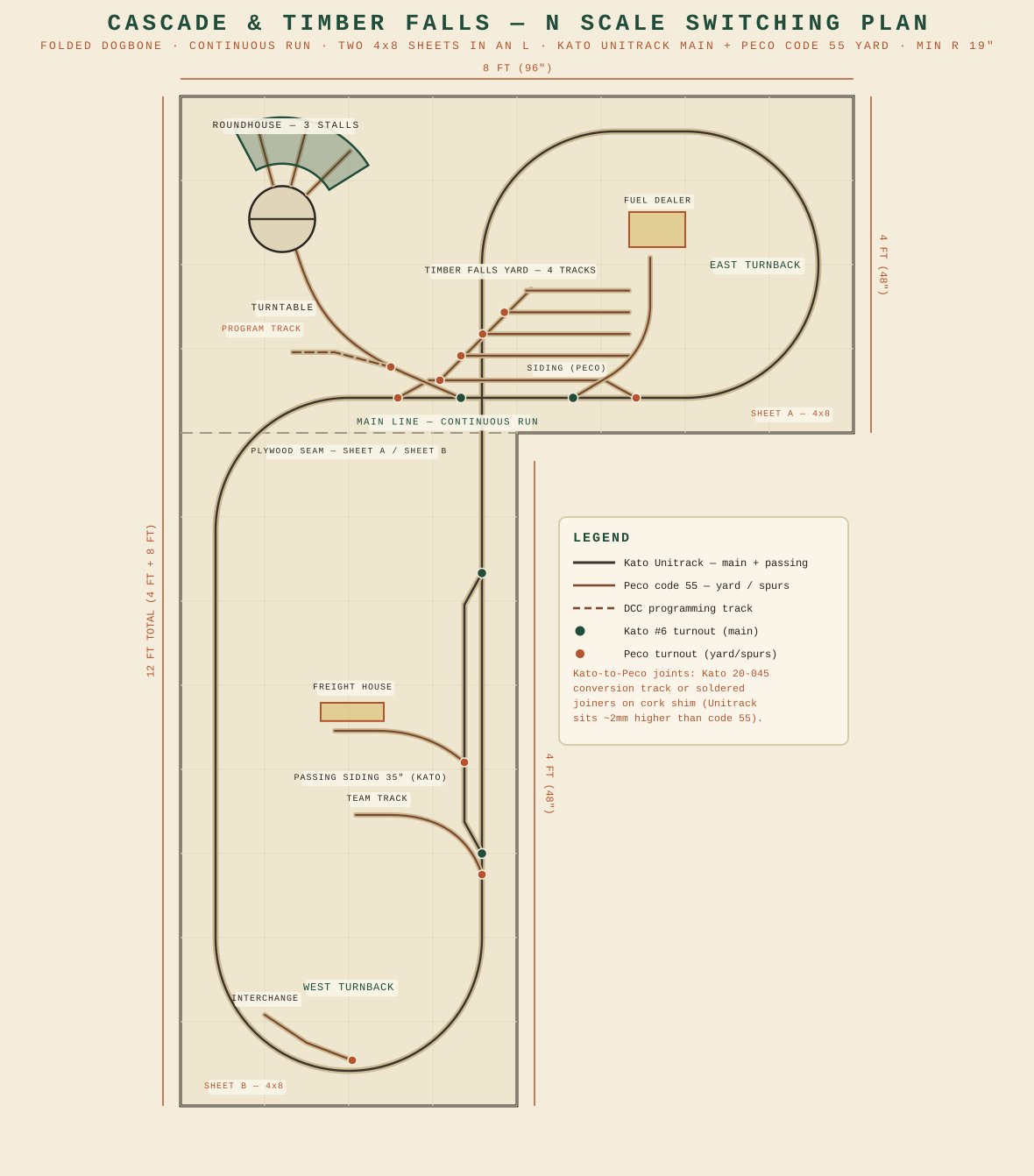
Cascade & Timber Falls — N Scale

A switching railroad with a continuous main — folded dogbone on two 4×8 plywood sheets in an L. Kato Unitrack speed on the main, Peco code 55 detail in the yard.

Cascade and Timber Falls N scale track plan — folded dogbone on an L-shaped table
Full plan — click to open the high-res SVG in a new tab.

The Concept

Trains run continuously around a folded dogbone — up the 12-foot leg, around the corner, out the 8-foot leg and back — while the operator works the railroad: pulling cuts from Timber Falls Yard, spotting cars at the fuel dealer, freight house, and team track, and swapping traffic at the interchange inside the west turnback. The turntable and 3-stall roundhouse anchor the corner as the engine terminal. A 35" passing siding on the long leg lets a second train hold the main while you switch.

Benchwork

Two uncut 4×8 sheets of ply butted in an L — sheet A across the top, sheet B down the left, seam bolted over a shared joist. 2" foam on top, cork roadbed under the main, cork sheet under the yard.
Spec Sheet

FootprintL — 8 ft × 12 ft, arms 4 ft wide (two 4×8 sheets)
ScaleN · 1:160
Main line~46 ft run, single track folded dogbone
Min radius19" (Kato R481) on turnbacks — safe for SD70MACs & autoracks
GradesNone — dead flat, switching first
Turnouts4× Kato #6 (main/passing) · 10× Peco (yard, spurs, ladder)
Yard4 tracks, ~24" each ≈ 16-car capacity + ladder
Engine terminalTurntable + 3-stall roundhouse + program track
IndustriesFuel dealer · freight house · team track · interchange

Track — the Mixed Fleet

UseProduct
Main + turnbacksKato Unitrack R481-15° (20-140) curves, S248 straights
Passing sidingKato Unitrack + 2× Kato #6 turnouts (20-202/20-203)
Yard & ladderPeco code 55 flex (SL-300F) + Peco SL-E395F mediums
SpursPeco code 55 flex + Peco small radius turnouts
Kato→Peco jointsKato 20-045 conversion track, or soldered joiners on a cork shim — Unitrack roadbed sits ~2 mm proud of code 55
TurntableKato 20-283 electric turntable · Walthers roundhouse kit

Operating Session

A session runs like the prototype: the road train arrives off the "east" turnback (staging), holds the passing siding, and the yard job breaks it down. Locals work the three industries in turn — facing-point moves at the freight house force runaround work on the passing siding, which is where the layout earns its keep. Power gets serviced at the roundhouse between turns. One operator stays busy; two make it an evening.

The interchange track inside the west loop is the layout's "rest of the world" — every car routed there counts as delivered.

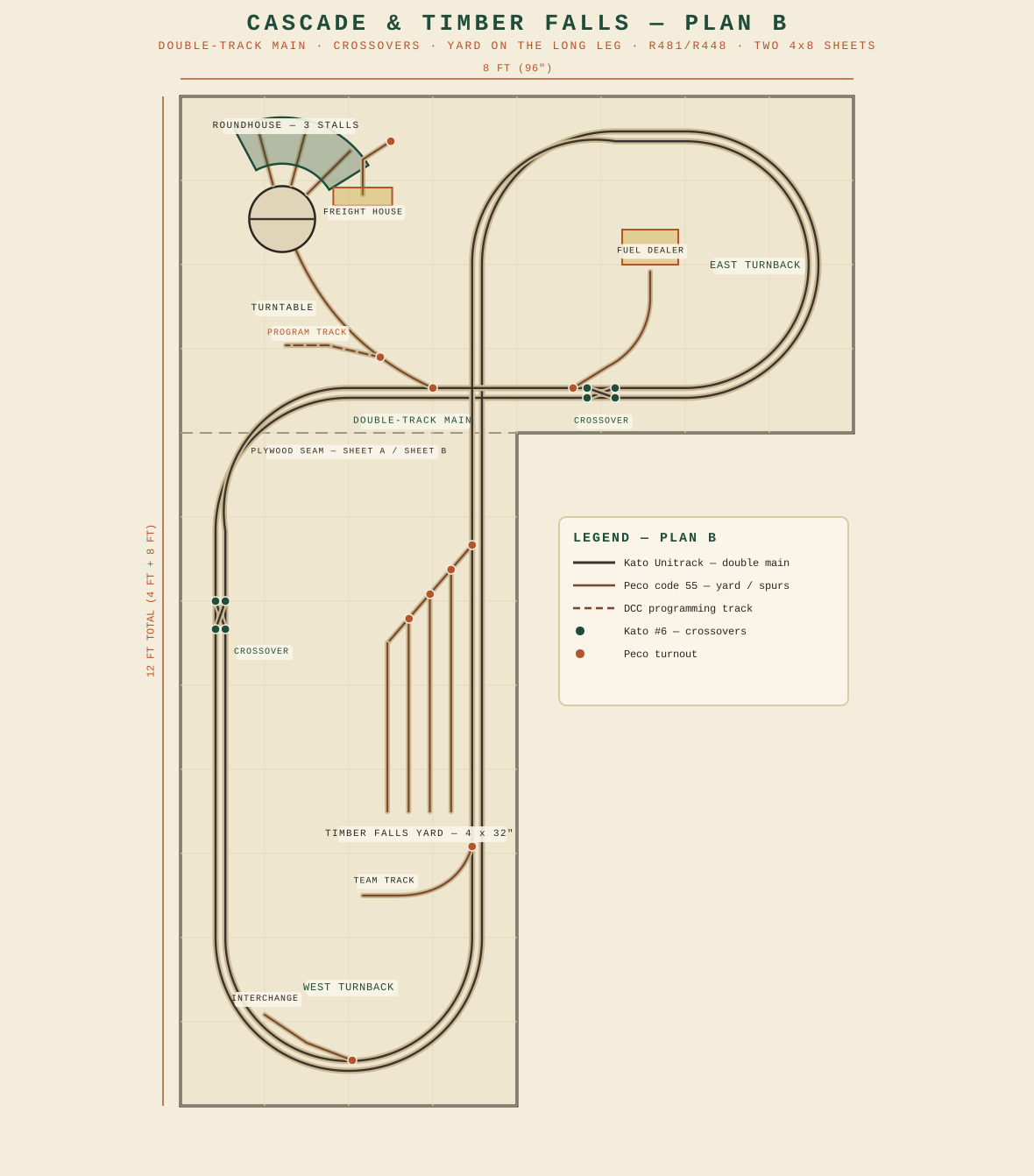
Plan B — Double-Track Alternate

Same benchwork, different philosophy: two mains for real railfanning, yard stretched down the long leg.

Plan B — double track folded dogbone with yard on the long leg
Plan B — click to open the high-res SVG.

What Changes

The single main becomes a double-track folded dogbone — R481 outside, R448 inside, Kato 1.4" spacing — with crossovers on the top arm and the long leg. Two trains orbit unattended in opposite directions while you switch; that's the BNSF-mainline-in-the-living-room effect. The yard moves to the long leg and grows to four 32" tracks (~24 cars), worked from the inside main. Freight house moves to the top arm beside the engine terminal; team track and interchange stay in the west loop.

A or B?

 Plan APlan B
Mains1 + passing siding2, with crossovers
Trains running1 (+1 holding)2 continuous
Yard capacity~16 cars (24" tracks)~24 cars (32" tracks)
Switching flavorRunarounds on the siding — more puzzleYard work while mains run — more show
Turnouts4 Kato + 10 Peco8 Kato + 10 Peco
Track costLowerHigher (second loop + 4 more #6s)
Aisle-side reachEasier — less track densityYard sits mid-leg; keep it front-edge

Honest recommendation: Plan A operates better solo; Plan B is the one that impresses visitors. Both use the same benchwork, engine terminal, and control plan — you could even build A now and add the second main later, since the outer loop is identical.

Plan C — Durango & Silverton

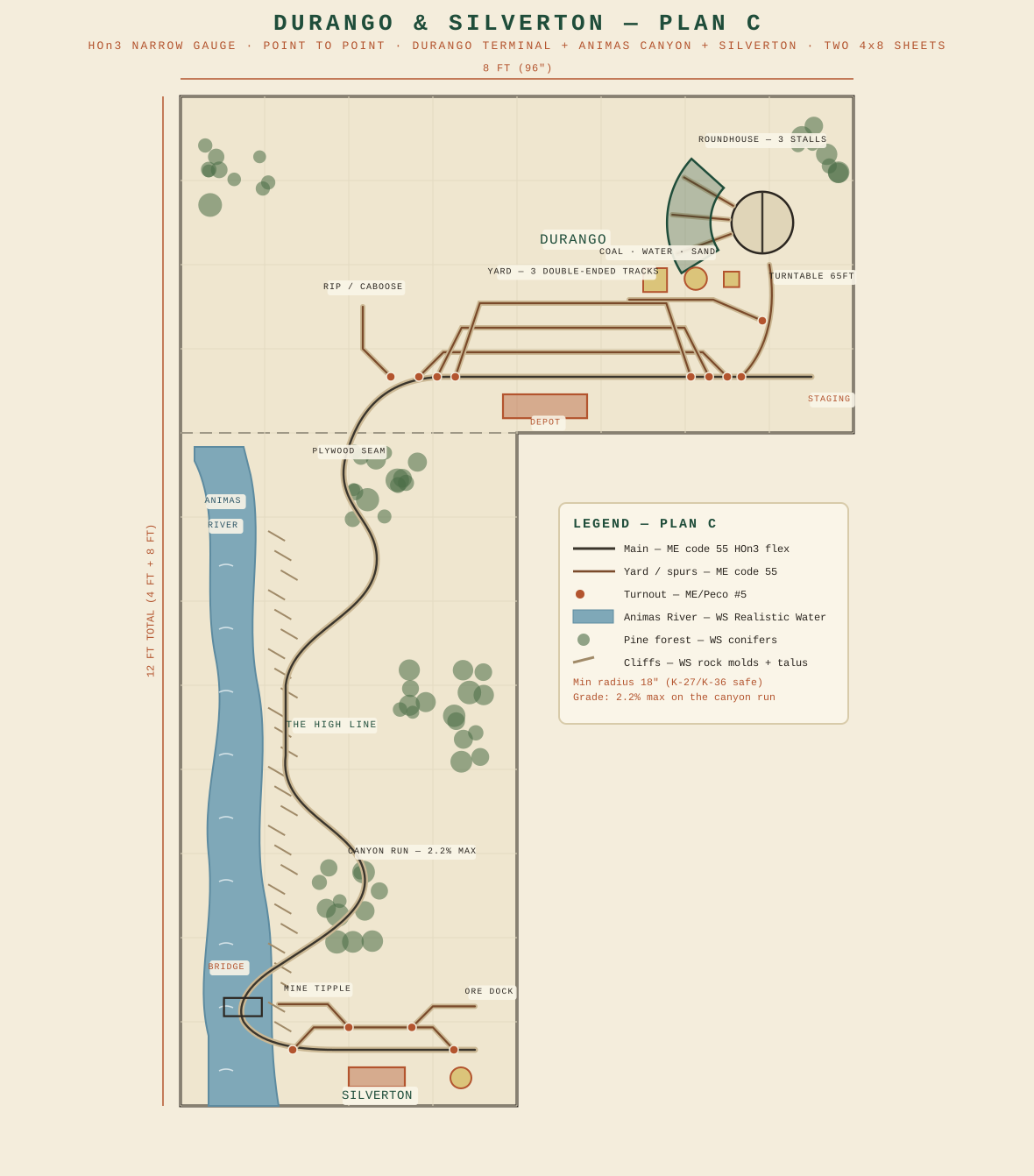
HOn3 narrow gauge, point to point: the Durango terminal, the Animas canyon, and Silverton at the end of the line — scenery-first.

Durango and Silverton HOn3 track plan — Durango yard with roundhouse, Animas canyon run, Silverton terminal
Plan C — click to open the high-res SVG.

The Concept

Sheet A is Durango: a three-track double-ended yard along the depot, a RIP/caboose spur, and the engine terminal — 65 ft turntable, 3-stall roundhouse, and the coal–water–sand service row every K-27 visits before the climb. A staging stub off the east end stands in for the rest of the D&RGW.

Sheet B is the show: the main winds down the canyon at 2.2% max, out onto the High Line ledge above the Animas River, across a deck-girder bridge, and into Silverton — runaround, mine tipple, ore dock, depot, water tank. One train, one crew, the whole 45-mile experience in twelve feet.

Power & Control

Blackstone Models K-27 / K-36 Mikados (factory sound) and D&RGW/D&S rolling stock. Same control plan as the N layout: Digitrax DCS52 with the program track on the roundhouse lead — narrow gauge sound locos are exactly where DCC earns it.

Track & Roadbed

ItemProduct
RailMicro Engineering HOn3 code 55 flex; ME / Peco #5 turnouts
RoadbedMidwest Products cork roadbed on the main, cork sheet under Durango yard
Sub-roadbedWoodland Scenics SubTerrain — 2" foam base, risers + 2% incline sets for the canyon grade
Turntable65 ft pit type (Diamond Scale class) with ring rail
BridgeMicro Engineering deck girder over the Animas
BallastWoodland Scenics Fine Cinders on the main — D&RGW ran on cinders, not granite

Scenery — Woodland Scenics Bill of Materials

SceneProducts
Terrain shellPlaster Cloth (C1203) over cardboard web + Lightweight Hydrocal (C1201)
Canyon wallsWS rock molds (C1230-series), Earth Colors liquid pigment kit (C1215) — leopard-spot washes
Talus slopesWS Talus, fine + medium, buff — below every rock face down to the river
Animas RiverRealistic Water (C1211) tinted blue-green + Water Effects (C1213) for the rapids and pour-overs
Ground coverEarth Undercoat, Fine Turf blends, coarse turf clumps; Scenic Cement (S191) over everything
ForestWS conifer/pine trees — buy the value packs, the San Juans need hundreds; Hob-e-Tac (S190) for foreground builds
DetailsStatic grass at Silverton meadows, snow-line tufts on the high ridges

Structures

StructureKit
Durango depotBanta Modelworks laser kit (D&S prototype)
RoundhouseBanta Modelworks Durango roundhouse, 3 stalls as built
Water tankCampbell Scale Models D&RGW-style tank
Coal tipple / sand houseCampbell or scratch from Mt. Albert scale lumber
Silverton depot + tippleBanta / AMB laser kits; ore dock scratchbuilt

Build order that works: track and wiring proven bare, then terrain shell, rocks, river pour, ground cover, trees — structures last so they sit in the scenery, not on it.

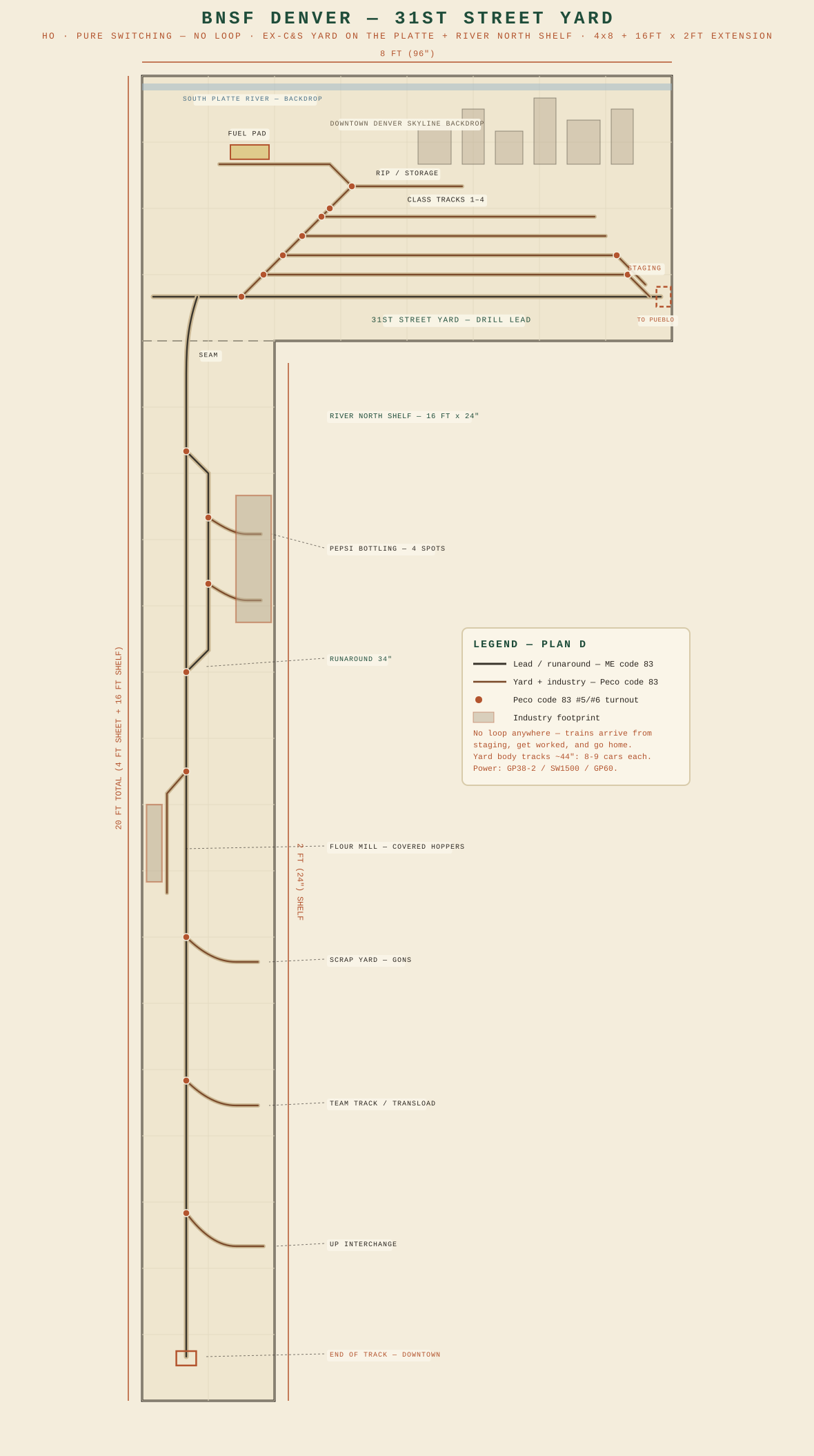
Plan D — BNSF Denver, 31st Street Yard

HO scale, pure switching — no loop, no excuses. The old C&S yard on the South Platte behind the ballpark, plus the River North industrial lead.

BNSF Denver 31st Street Yard HO switching plan — 4x8 yard plus 16 foot industrial shelf
Plan D — click to open the high-res SVG.

The Concept

Downtown Denver, BNSF's 31st Street Yard — the ex-C&S/Burlington flat yard wedged between the South Platte and the skyline. The 4×8 carries the yard: a full-length drill lead, four class tracks (~44", 8–9 cars each, double-ended on the A/D side), RIP track, and a fuel pad. A staging cassette off the east end is the rest of the railroad — Pueblo, Alliance, the world.

The 16-foot × 24" shelf is the River North lead: Pepsi bottling plant (4 spots, two doors), flour mill working covered hoppers, scrap yard loading gons, a team track, and the UP interchange — with one 34" runaround in the middle to sort out all the facing-point trouble. Track dies at a bumper under the skyline. Nothing runs in circles here; a job comes out of staging, works the district, and goes home when the list is done.

Spec Sheet

Footprint4×8 sheet + 16 ft × 24" shelf (20 ft total leg)
ScaleHO · 1:87 — standard gauge
StylePoint-to-staging switching; no continuous run
TrackMicro Engineering code 83 flex; Peco code 83 #5/#6 turnouts (17 total)
Yard4 class tracks + drill lead the full 8 ft — classify without fouling the shelf
IndustriesPepsi (4 spots) · flour mill · scrap · team track · UP interchange
PowerYour GP38-2s, SW1500s, GP60s — 4-axle territory; run it with the roster's BNSF units
OpsCar cards or JMRI OperationsPro switch lists; one crew ≈ 45-minute job
Reach24" shelf = everything within arm's length; 4×8 yard worked from the front edge

The whole automation stack applies as-is — RFID at the yard throat reads every cut that arrives, and the ACS712s watch the shelf blocks.

Control — Digitrax DCC & Kato DC

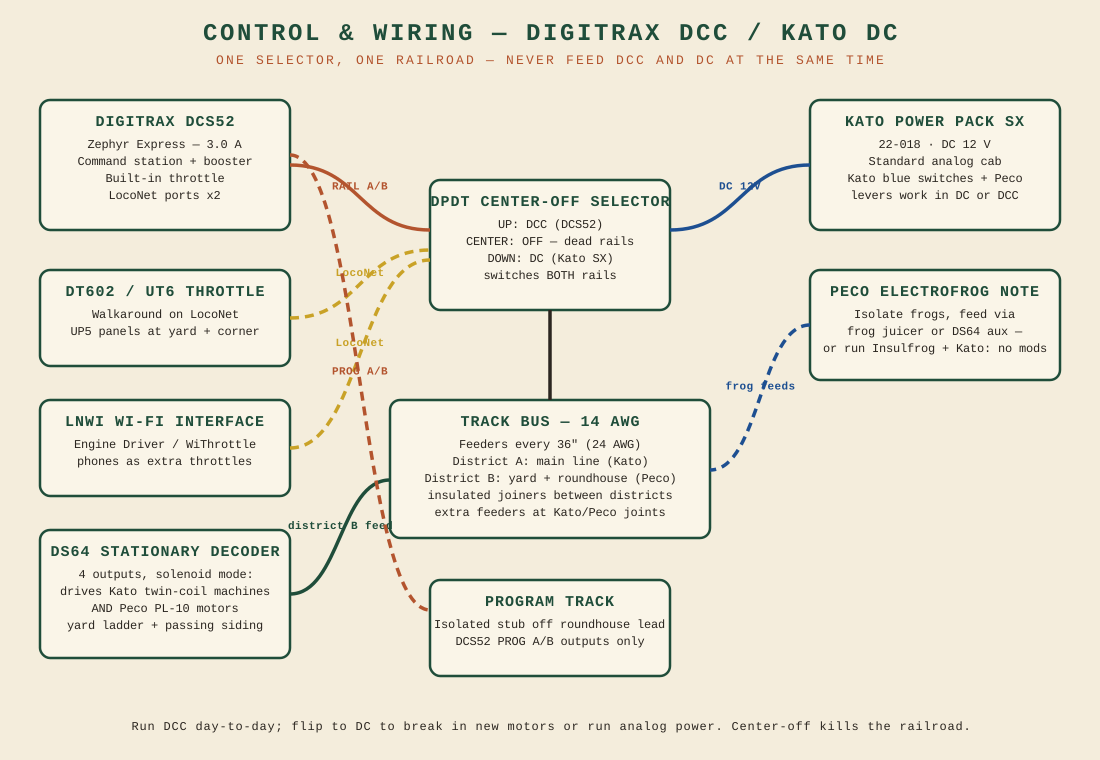
DCC railroad day to day, with a DC fallback for break-ins and analog power — one selector, never both.

Wiring diagram — Digitrax DCC and Kato DC through a DPDT center-off selector
Control & wiring schematic — click for full size.

Digitrax DCC Stack

UnitRole
DCS52 Zephyr ExpressCommand station + 3 A booster — plenty for 2–3 N scale sound units running
DT602 / UT6Walkaround throttles on LocoNet, UP5 jacks at the yard and the corner
LNWIWi-Fi throttles — Engine Driver / WiThrottle on phones
DS64Stationary decoder in solenoid mode — fires Kato twin-coil machines and Peco PL-10s; yard ladder + siding ends get routes
Wiring14 AWG bus, 24 AWG feeders every 36", district A (main) / district B (yard + engine terminal) split with insulated joiners
Program trackIsolated stub off the roundhouse lead on DCS52 PROG A/B — new decoders never touch the main until they're addressed
Peco frogsElectrofrog: isolate + feed via frog juicer (or DS64 aux contacts). Insulfrog/Kato: nothing to do

Kato DC Side

UnitRole
Kato Power Pack SX (22-018)12 V DC analog cab for break-in runs and non-decoder power
Kato blue switchesTurnout control chained off the accessory bus — work the same whether track power is DC or DCC
DPDT center-offThe one rule: track bus feeds from DCS52 or the Kato pack, both rails switched, center = everything dead. DCC and DC never meet

Why keep DC at all? Fresh mechanisms break in smoother on clean analog power, and it's a five-second test for "is it the decoder or the motor."

Automation — Arduino & Raspberry Pi

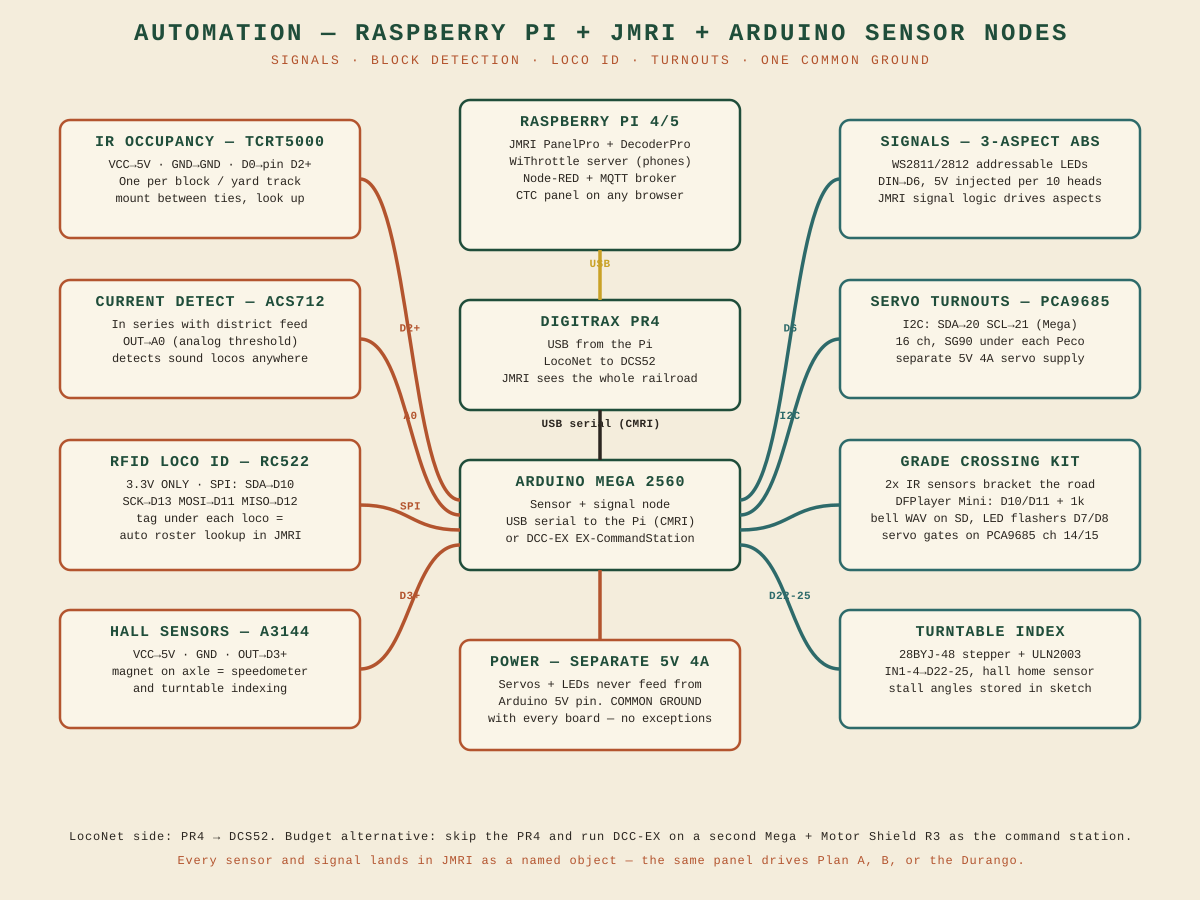
Signals, block detection, loco identification, and the dispatcher's panel — hookup specs for every board on the railroad.

Automation wiring — Raspberry Pi running JMRI, Arduino Mega sensor node, sensors left, outputs right
Automation architecture — Pi is the brain, the Mega is the nervous system. Click for full size.

Raspberry Pi Starter Kit

ItemSpec / Hookup
BoardPi 4 or 5, 4 GB kit (CanaKit-style: case, 32 GB SD, official PSU, heatsinks)
OS + softwareRaspberry Pi OS Lite → JMRI (PanelPro + DecoderPro), Node-RED, Mosquitto MQTT
DCC linkDigitrax PR4 — USB to the Pi, LocoNet to the DCS52. JMRI now sees every throttle, turnout, and sensor
ThrottlesJMRI WiThrottle server → Engine Driver on phones (replaces/augments the LNWI)
DispatcherJMRI CTC panel served to any browser — the dispatcher's desk is the couch
Roster syncDecoderPro reads/writes every decoder on the program track — pairs with the site roster database

Arduino Kits & Nodes

ItemSpec / Hookup
Starter kitElegoo Mega 2560 "Most Complete" kit — the Mega's 54 pins matter; Unos run out fast
Pi linkUSB serial, CMRI protocol (ArduinoCMRI library) — every input becomes a JMRI sensor, every output a JMRI turnout/light
Budget DCCDCC-EX EX-CommandStation: second Mega + Arduino Motor Shield R3 ≈ a full command station; WiThrottle over Wi-Fi with an ESP8266
ExpansionDCC-EX EX-IOExpander sketch turns spare Unos into remote pin banks over I2C
Power ruleSeparate 5 V 4 A supply for servos + LED strips. Common ground between every board — no exceptions. Never feed servos from the Arduino's 5 V pin

Sensor Hookup Sheets

SensorWiringJob
TCRT5000 IRVCC→5V, GND→GND, D0→D2… one digital pin per blockSpot occupancy: yard tracks, stalls, hidden staging. Mount between ties looking up
ACS712 5AIn series with a district feed; OUT→A0, threshold in sketchWhole-block detection — any powered loco or resistor-wheelset car
RC522 RFID3.3 V only! SPI: SDA→D10, SCK→D13, MOSI→D11, MISO→D12, RST→D9Loco ID: tag under each unit, reader between the rails at the yard throat — JMRI looks up the roster entry as power arrives
A3144 HallVCC→5V, GND, OUT→D3 (10k pull-up)Axle magnet = scale speedometer; also turntable home-position index
HC-SR04TRIG→D4, ECHO→D5 (voltage divider)Approach detection at the grade crossing — distance, not just presence

Output Hookup Sheets

FeatureWiringNotes
SignalsWS2811/WS2812 heads, DIN→D6, 470 Ω in data line, inject 5 V every ~10 headsJMRI Signal Logic drives real ABS aspects from the block sensors
Servo turnoutsPCA9685 on I2C (Mega: SDA→20, SCL→21); SG90 under each Peco throwbarSlow-motion throw, adjustable endpoints — kinder than solenoids
Grade crossingDFPlayer Mini: TX/RX→D10/D11 via 1 kΩ, speaker 8 Ω; flashers→D7/D8; gates on PCA9685 ch 14/15Two IR sensors bracket the road; bell WAV on the SD card
Turntable drive28BYJ-48 stepper + ULN2003: IN1-4→D22-25; hall sensor homes itStall angles live in the sketch — one button per stall
Layout lightingWS2812 strip on D6 chain or second pin; Node-RED dashboard sliderDay/night cycle with dusk-orange transition

The Features You Didn't Ask For

The complete list — everything this stack unlocks beyond signals and sensors:

Auto-stagingIR sensors + JMRI Dispatcher run the continuous train around Plans A/B while you switch — it slows and holds when you foul the main
Yard camPi Camera on a boxcar or the yard tower, RTSP stream to a phone — check couplings without bending over
Fast clockJMRI fast clock on a cheap I2C OLED at the fascia, synced to WiThrottles for timetable ops
Sound scenerySecond DFPlayer: river audio under the Animas canyon, roundhouse compressor clatter at Durango
TelemetryMQTT topics for every sensor → Node-RED dashboard: block map, turnout states, session car counts
CTC machinePhysical panel — toggles + LEDs on an EX-IOExpander Uno — for the full tower-operator experience
Derail alarmCurrent spike detection on the ACS712s pushes a phone notification before you smell the smoke

Build order: block detection first (everything else keys off it), then signals, then servo turnouts, then the toys.